
Kennedy Family Sues to Block Trump's Triumphal Arch Near Arlington Graves
Nine members of the Kennedy family have joined veterans, Virginia and the District of Columbia in court to stop construction of a planned arch at Memorial Circle.
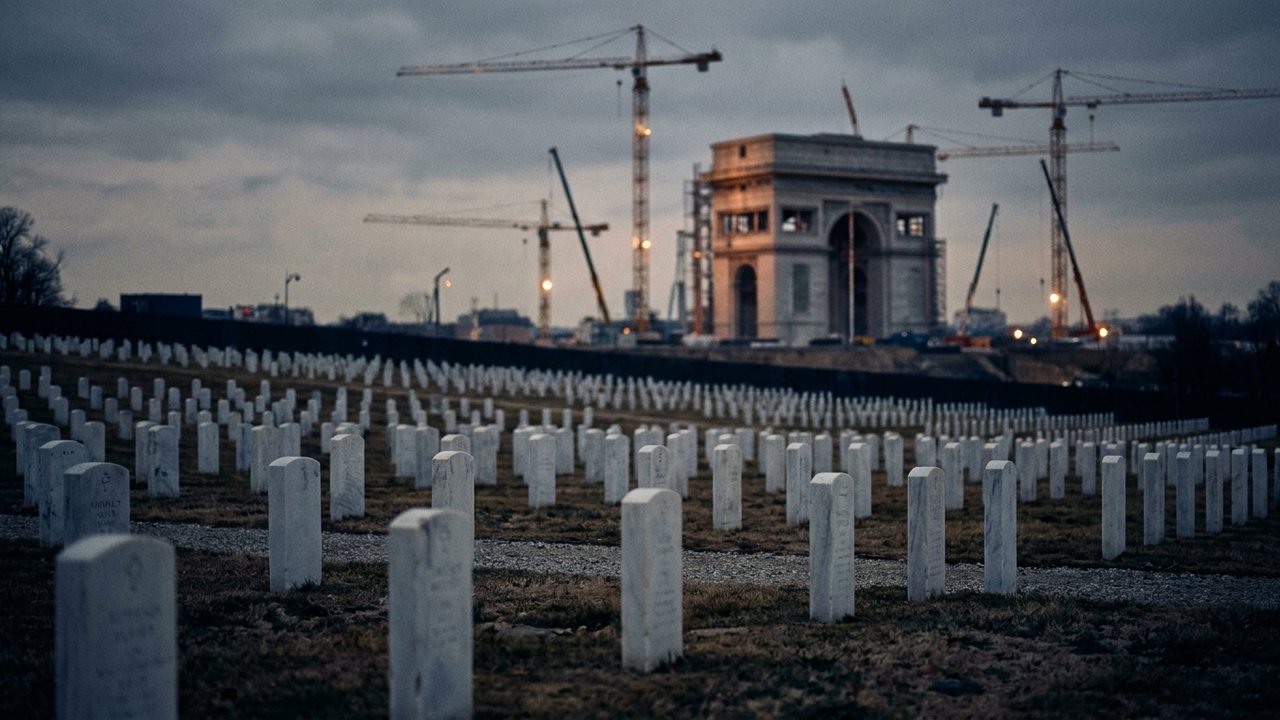
Nine members of the Kennedy family sued on November 10 to block construction of President Trump's planned triumphal arch, arguing in a court filing that the structure would cast shadows over their relatives' graves at Arlington National Cemetery. The plaintiffs are seven children of Senator Robert F. Kennedy and Ethel Kennedy, a grandchild, and the son of Senator Edward M. Kennedy. Three of their relatives are buried at Arlington near the grave of President John F. Kennedy. Rory Kennedy and Maxwell Kennedy said in a statement that a towering arch 'casting shadows across the graves of our father, mother, and uncles, as well as the graves of so many who have served our country, would also cast a shadow over our democratic principles.'
What's Actually Being Built, and Who's Already Suing
The White House plan calls for a 250-foot arch at Memorial Circle on Columbia Island, at the western end of Arlington Memorial Bridge. It would include a mezzanine at 166 feet, a 24-foot observation deck, and a 60-foot Lady Liberty statue on top. The National Capital Planning Commission approved the project in an 8-4 vote, and hours later U.S. District Judge Tanya Chutkan issued a temporary restraining order blocking construction for 14 days. By the time the Kennedy family joined the case, a group of Vietnam War veterans, the District of Columbia, the state of Virginia, and the Arlington County Board had all already filed suits of their own. The Kennedy family's filing argues the administration never got the congressional approval required for commemorative construction in the capital.
The Military Angle That Complicates the Legal Fight
Trump said in September that the arch would double as a military facility, capable of storing and deploying drones and positioning snipers, citing a request from the military for national security purposes. Arlington County's lawsuit argues that using the arch to stage ammunition, drones, and snipers raises the risk of accidents given how close it sits to commuters and tourists. The Interior Department has said only that it 'continues to follow all laws and regulations,' without elaborating.
What a Stalled Federal Project Does to Contractors and Crews
I've spent years managing commercial property, and I can tell you what a project like this looks like from the contractor's side once lawsuits start piling up. Every subcontractor lined up for a project this size, structural steel, concrete, electrical, stonework, is now sitting on a bid they can't move forward on. Crews don't get paid for standing by. Equipment that was supposed to mobilize sits idle. On a private commercial job, a tenant buildout or a shopping center renovation, that kind of delay eats into a contractor's margin fast because their overhead keeps running whether the job is active or not. A federal project with this many plaintiffs, veterans, a state, a county, and now a prominent family, isn't getting resolved quickly, and the longer it sits, the more it costs whoever eventually builds it.
Jobs, Business and Livelihoods Riding on This Case
For the construction trades that would have built this, the lawsuits mean real uncertainty about when, or if, the work ever starts. A 250-foot structure with a military function isn't a small job: it needs specialized contractors, security-cleared crews for the drone and sniper components, and a long construction timeline. Small and mid-size contractors who might have bid on pieces of this now have to plan around a project that could be tied up in court for a long time. For business owners more broadly, this is a reminder that government contracts, no matter how big the headline number, aren't income you can count on until the legal challenges are resolved.
What to Watch Next
Judge Chutkan's restraining order runs out after its 14 days, so watch for whether she extends it or lets construction resume. Watch whether the Kennedy family's argument about missing congressional approval gains traction, since that's a different legal theory than the sightline and safety arguments from the veterans, Virginia, and Arlington County. And if you're a contractor anywhere near a bid on this project, don't plan cash flow around it until there's a final ruling.